AI, je kunt er niet meer omheen. Ook natuurorganisaties niet. Ook als SPOTS stuitten wij steeds vaker op AI gegenereerde filmpjes of foto’s. Soms is het direct duidelijk dat het hier om nepbeelden gaat. Maar met regelmaat stuitten we op materiaal waarbij we denken; is dit nu echt of niet?
Maar er zijn nog andere dilemma’s, verderop verwoord door Carina Crayton. Zij stelt o.a. dat veel AI materiaal van wilde dieren ingesteld is op ‘leuke’ en dus deelbare foto’s en filmpjes. Beelden die de echte werkelijkheid laten zien, worden hierdoor verdrukt. Ook ontstaat door AI, aldus haar, een vertekend beeld van de werkelijkheid van natuurbescherming. Maar ook van wilde dieren.
Ik maak me al langer zorgen over wat ik het ‘Walt Disney’ gevoel noem. De perceptie dat wilde dieren ‘cute’ zijn. Dus aaibaar en ongevaarlijk. Het leidt tot bizarre situaties waarbij toeristen gevaarlijke capriolen uithalen tijdens safari’s. Het leidt tot excursies waarbij je als toerist aan de wandel kunt met een leeuw of kunt knuffelen met een cheeta of tijger. Dieren waarvan je zou moeten denken: roofdieren, niet geschikt voor interactie. Dit Walt Disney gevoel leidt ook tot een grote illegale handel in specifieke wilde dieren. Omdat mensen ze als huisdier willen houden. Vaak worden ze hierbij getriggerd door filmpjes of foto’s van mensen die interactie hebben met wilde dieren. Ik maak me daarom inderdaad best zorgen om de vele AI filmpjes die ik voorbij zie komen waarbij dit Walt Disney gevoel alleen maar aangewakkerd wordt.
AI; we kunnen er niet meer omheen. Het is daarom van groot belang dat we ons bij beelden afvragen; is dit echt of niet? Alsook; is dit nu normaal of niet. Wilde dieren zijn er niet voor gemaakt alsook zijn ze niet ingesteld op contact met mensen. Laten we ze vooral zien maar bovenal respecteren voor wat ze zijn; wild.
Hieronder een gedeelte van wat Carina Crayton publiceerde over AI beelden van wilde dieren en natuurbescherming. Via deze link kun je haar hele input lezen.
Simone Eckhardt
Viral AI content – the new threat to Wildlife Conservation
Social platforms thrive on engagement, and AI visuals are designed to deliver it. They’re polished, emotional, and “shareable.” A group of pangolins fighting a snake, a baboon riding a lion, a tiger cuddling a child – none of it is real, but all of it is irresistible to algorithms. Every viral fake pushes authentic conservation posts further down the feed, silencing the voices of those who are actually saving lives.
These dangerous Illusions are not just harmless entertainment. It’s a distortion that carries real-world consequences, where wild animals misrepresented as cute pets fuel the demand for illegal trade. Where tourists and locals are misled into thinking wild animals are approachable, putting lives at risk. Fabricated interactions confuse the public about the natural behaviour of wild animals, trivializing the challenges conservationists face.
We have to question viral wildlife content. Especially if it has no references from a credible wildlife organization or news source. Especially if it’s cute or awe-inspiring.
If it looks too perfect, it probably is.
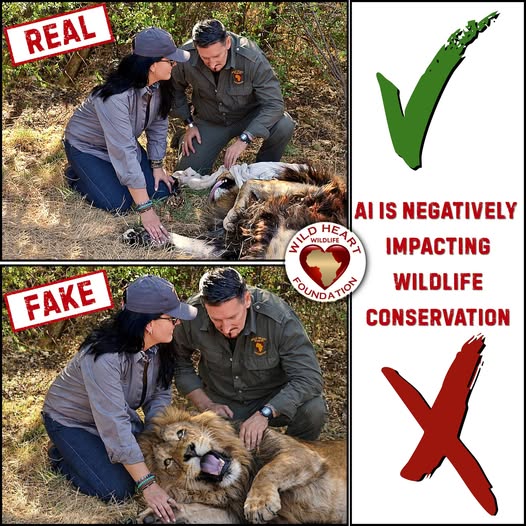
Foto: the attached image at the top is of a real veterinary intervention in the life of a wild lion. The bottom image is the one that most people would love and interact with, but it’s not real. © Carina Crayton. All Rights Reserved. 13 March 2026